Frequently Asked Questions
Foot Care Nurse (FCN / Advanced Foot Care Nurse):
- A Registered Nurse (RN) or Registered Practical Nurse (RPN) with additional post-graduate training in advanced foot care.
- Provides nursing-based foot care with sterile medical tools, including: Medical-grade nail and skin care, Corn and callus reduction (non-invasive), Diabetic foot care and risk assessments, Circulation and sensation screening, Early identification of problems, Client education and prevention, and Referrals to appropriate providers.
- Foot care for Mild to Moderate Ingrown nails when the nail edge just starts growing into the skin, causing redness and pain.
- Focuses on maintaining foot health, monitoring risk, and preventing complications, particularly for seniors, people with diabetes, and individuals with mobility or circulation challenges.
- Works within a nursing scope of practice and can collaborate with physicians and chiropodists when more advanced treatment is needed.
- Often provide in-home services, making care accessible for seniors and those with mobility challenges.
Chiropodist (or Podiatrist in some provinces):
- A regulated foot specialist with a dedicated post-secondary program in chiropody or podiatry.
- Able to diagnose and treat a full range of foot and ankle conditions.
- Can prescribe certain medications, order diagnostic imaging, perform advanced procedures, and conduct minor foot surgeries such as moderate to severe ingrown toenail removal.
- Often manages more complex or structural foot issues requiring medical or surgical intervention.
Family Doctor and/or Nurse Practitioner
- Provides general medical care, diagnoses and treats a wide range of health conditions, and coordinates referrals to specialists as needed. See below for details of common foot care provided by a Family Doctor.
- Foot pain, inflammation, and acute injuries
- Infections (skin, nail, or soft tissue)
- Complications from ingrown toenails
- Warts (assessment and treatment or referral)
- Diabetic foot concerns, gout, and skin conditions
- Prescribing medications, ordering tests, and making specialist referrals
- Provides general medical assessment and referrals for foot concerns. Does not usually offer routine or preventive foot care services.
Nail Salon / Pedicure Services
- Nail salons provide cosmetic foot and nail care.
- They are not medical professionals and do not assess foot health, manage medical conditions, or provide sterile medical treatment.
- Nail salon services are not recommended for individuals with diabetes, poor circulation, neuropathy, or complex foot concerns.
Foot Care Canada uses Jane App, a secure, Canadian Electronic Health Record (EHR) system.
Jane allows clients to:
-
Book appointments online
-
Create a secure profile
-
Complete intake and consent forms
-
Receive appointment confirmations and reminders
-
View invoices and payment receipts
For the nurse, Jane is used to:
-
*Maintain confidential electronic health records
-
Document assessments and treatment notes
-
Track medical history and consent
-
Process payments securely
-
Manage scheduling
*Jane is compliant with Canadian privacy legislation (including PHIPA in Ontario) and uses encrypted data storage to protect your personal health information.
The price difference reflects education, regulation, scope of practice, and level of clinical responsibility—not the value of the person providing care.
Registered Nurses (RNs) and Registered Practical Nurses (RPNs) are regulated healthcare professionals governed by the College of Nurses of Ontario (CNO). They are trained to assess foot health, recognize medical risks, prevent infection, and make clinical decisions. Nursing foot care includes professional assessment, use of sterile instruments, health education, and referrals when needed. RN services typically cost more because RNs have a higher level of education and are authorized to manage more complex health conditions independently.
Personal Support Workers (PSWs) are not regulated healthcare professionals. While they provide valuable personal care support, they are not authorized to assess, diagnose, or treat medical foot conditions, use sterile instruments, or provide clinical nursing foot care. PSW services are usually lower in cost because their role, training, and responsibility are different.
Cost difference:
-
RN: Highest level of training and clinical responsibility → higher cost
-
RPN: Regulated nurse providing safe foot care for stable conditions → moderate cost
-
PSW: Personal care support, not medical foot care → lower cost
The right choice depends on your health needs, risk factors, and level of care required.
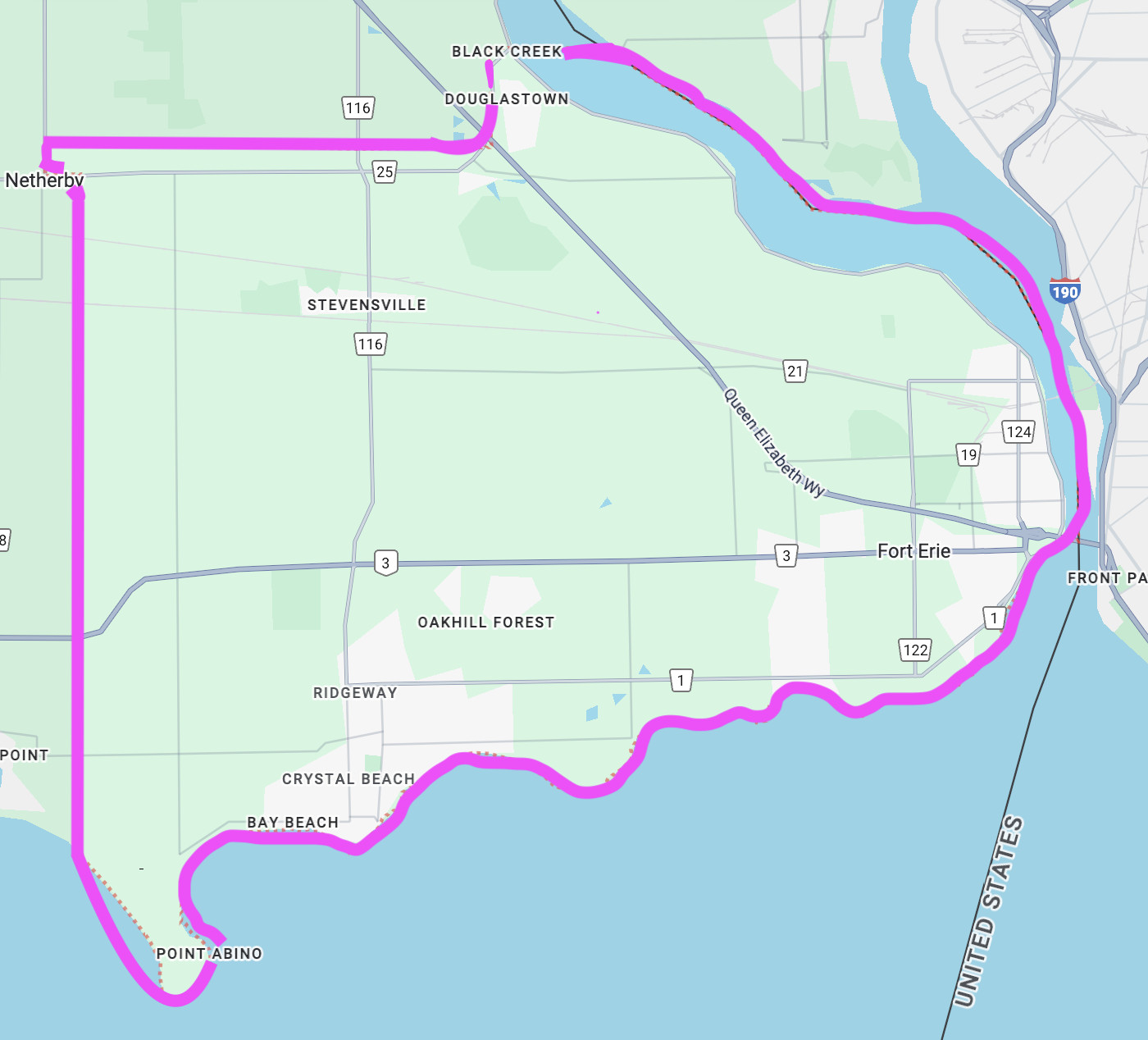 See above for the Fort Erie area covered by our foot care nurses.
No referral is required. You can book an appointment directly. If medical follow-up is needed, we will refer to your healthcare provider (with your consent), and/or provide you with the information you need for follow-up with your healthcare provider.
When the foot care nurses visit facilities, they can see multiple clients without having to drive between locations. When visiting a private home, nurses need to drive to the location for one client. The difference in price it due to the time, distance and costs for gas/car/etc...
Accepted Payment Methods
Foot Care Canada nurses accept several forms of payment for foot care services. You may choose to pay by e-transfer, debit, credit card, or cash in person at your appointment. Each method is designed to provide flexibility and convenience to clients.
Receipt for Insurance Submission
After payment is made, you will receive a detailed receipt. This receipt is suitable for submission to your insurance provider, ensuring you have the proper documentation for reimbursement or record-keeping purposes.
Are you Paying on Behalf of a Client?
If you are arranging payment for a client (such as your senior parent), the simplest option is to keep a credit card securely stored in your Jane Health App profile. If you are a new client, you can access your profile by clicking on the "Book Now" button above to the right of the screen and making a new profile, or if you are a returning client you can login to your profile and add a payment option. Foot Care Canada uses the Jane App for its all-in-one practice management, streamlining booking, charting, billing, and user-friendly platform. Once the foot care appointment is complete, the nurse will process the payment using the credit card on file. You will then receive an email containing the receipt. This method eliminates the need for an in-person transaction (particularly if you live in a different town/city), streamlining the payment process and providing immediate confirmation.
Is Foot Care by a Registered Nurse covered by OHIP?
OHIP does not cover private foot care services provided by Registered Nurses; however, many clients are able to seek reimbursement through extended health benefit plans.
Is foot care covered by extended health benefits?
Many extended health benefit plans cover foot care provided by a Registered Nurse (RN). Coverage varies by plan, so we recommend confirming details directly with your insurer prior to your appointment.
Do you offer direct billing?
At this time, Foot Care Canada does not offer direct billing. A detailed receipt will be provided after your appointment for easy submission to your benefits provider.
What information will be included on my receipt?
Your receipt will include all information typically required by insurers for reimbursement, including RN credentials, service details, and payment confirmation.
Which insurers are you registered with?
By February 2026, Foot Care Canada Registered Nurses will hopefully be registered providers with Veterans Affairs Canada, Medavie Blue Cross, and Green Shield for eligible clients. Waiting for approval.
If you have questions before booking, we’re happy to help guide you.
- Nail Issues: Thick nails, ingrown toenails (onychocryptosis), fungal nails (onychomycosis).
- Skin Concerns: Calluses, corns, dry cracked heels, athlete's foot, warts.
- Chronic Disease Complications: Diabetic foot care (neuropathy, ulcer prevention), arthritis, vascular issues.
- Mobility Problems: Painful feet, structural deformities.
- Assessment: Full foot and lower limb assessments.
- Treatment: Nail trimming, callus/corn reduction, skin care, infection management.
- Wound Care: Management of minor wounds (not deep surgical wounds).
- Education: Guidance on proper footwear, hygiene, and self-care.
- Perform foot surgery.
- Administer injections or prescribe medications.
- Treat deep wounds or ulcers.
- Provide spa services like nail painting or massage.
We do not have a physical clinic location. A mobile foot care nurse offers several advantages over a clinic setting; primarily centered on convenience, accessibility, and personalized care in the comfort of a patient's own home, retirement residence or community setting.
A typical follow-up appointment lasts 30–60 minutes, depending on your needs and the complexity of care required. An initial assessment can last 60-90 minutes.
Your nurse will complete a foot and lower-leg assessment, review your health history, and provide thorough nail and skin care. You will also receive education on maintaining foot health at home, and referral information if indicated.
Yes. We follow Public Health Ontario Best Practices for Cleaning, Disinfection and Sterilization of Medical Equipment/Devices. It is the same sterilization standards as dental tools used at your dentists office. Below is Foot Care Canada's workflow diagram for Equipment Cleaning, Disinfection and Sterilization.

Yes. We offer full diabetic foot assessments, monitoring, and preventative care to help reduce risk of complications.
A Foot Care Nurse can safely assess, clean, dress, and monitor wounds, but will always refer you to a physician for diagnosis and antibiotic treatment if infection is suspected. This ensures you receive timely, appropriate care for the best possible healing outcome. You may also need a referral to a Wound Care Nurse for follow-up and/or ongoing care, depending on the severity of the wound and your risk for complications.
Most clients benefit from follow-up care every 6–8 weeks, though your nurse will work with you to create a schedule that best fits your needs.
Our practice focuses on foot and lower-limb care; however, basic fingernail trimming is included in foot care fee if needed by the client.
Foot care should not be painful. We use gentle, clinical techniques to ensure comfort throughout the appointment.
Not much! To help your visit go smoothly, please have a clean and comfortable place for you to sit with good lighting. The nurse will have their own seat with them. If possible, wash your feet beforehand or remove socks and footwear (if able) so your nurse can begin the assessment right away. You do not need to soak your feet. Pets should be secured for safety, and please have a list of your medications and any recent foot concerns ready to share. Everything else will be provided by your foot care nurse.
Foot care nurses avoid soaking feet because it can over-soften the skin, increasing the risk of skin tears, infection, and breakdown—especially for people with diabetes or reduced circulation. For people with diabetes, Diabetes Canada advises against foot soaking. Instead, nurses use safe, professional methods such as disinfection and moisturizers to keep the skin clean and healthy.
No. In Ontario, Registered Nurse Foot Care providers do not independently treat warts. If a lesion is suspected to be a wart, we assess the area and refer clients to the appropriate medical provider (family doctor or chiropodist) for diagnosis and treatment.